See how the Swipebox works
-

- PINTURA ELETROSTÁTICA
-

- FABRICAÇÃO, REVENDA E INSTALAÇÃO DE PORTAS AUTOMÁTICAS
-

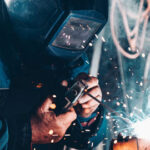
- MCR TEM TOTAL ESPECIALIZAÇÃO EM SOLDA INOX E AÇO






































 <\/p>\n
Get instant access to lessons taught by experienced private equity pros and bulge bracket investment bankers including financial statement modeling, DCF, M&A, LBO, Comps and Excel Modeling. Calculating working capital requires building a model in Excel and using data from a company\u2019s income statement (IS) and balance sheet (BS). What is a more telling indicator of a company\u2019s short-term liquidity is an increasing or decreasing trend in their net WC. A company with a negative net WC that has continual improvement year over year could be viewed as a more stable business than one with a positive net WC and a downward trend year over year. Some people also choice to include the current portion of long-term debt in the liabilities section.<\/p>\n
 <\/p>\n
For example, consider a manufacturing company facing challenges in collecting receivables from customers, leading to a significant increase in A\/R. Meanwhile, the company experiences rapid growth in production, requiring increased inventory levels and faster payments to suppliers, causing a surge in A\/P. In this scenario, the company\u2019s net working capital decreases, signaling potential cash flow constraints and liquidity challenges. Understanding the cash flow statement, which reports operating cash flow, investing cash flow, and financing cash flow, is essential for assessing a company\u2019s liquidity, flexibility, and overall financial performance. As a business owner, it\u2019s important to calculate working capital and changes in working capital from one accounting period to another to clearly assess your company\u2019s operational efficiency. Lenders will often look at changes in working capital when assessing a company\u2019s management style and operational efficiency.<\/p>\n
 <\/p>\n
The interpretation of either working capital or net working capital is nearly identical, as a positive (and higher) value implies the company is financially stable, all else being equal. Complete digital access to quality FT journalism with expert analysis from industry leaders. Clear communication and agreement on NWC targets and definitions between buyers and sellers are essential to avoid surprises down the line. It is important to clearly establish any adjustments to NWC during financial due diligence. Establishing clear limits for adjustments helps prevent unnecessary conflicts. We might also use a slightly higher number if these percentages were higher in historical periods further back.<\/p>\n
A comprehensive NWC analysis during financial due diligence can minimize disputes at closing and post-transaction. Additionally, a complete NWC analysis and understanding facilitates a smooth transition of operations from seller to buyer and prevents additional costs. Buyers and sellers negotiate a target net working capital amount to be delivered at the closing date (commonly known as the \u201cPeg\u201d) during financial due diligence.<\/p>\n
If a transaction increases current assets and current liabilities by the same amount, there would be no change in working capital. Countries in this category include Bangladesh, China, India, Indonesia, Pakistan, South Africa, Thailand, Turkey, Ukraine, and Vietnam. These countries derive sizable portions of their GDP, about 18 percent on average, from highly exposed sectors such as high-emissions manufacturing, fossil fuel\u2013based power, and agriculture. Jobs tend to be concentrated in change in net working capital<\/a> agriculture (more than 20 percent), while much of their capital stock is in manufacturing and fossil fuel\u2013based power. These countries would likely adjust to the transition mainly by decarbonizing industrial processes, expanding renewable-power capacity, and helping farmers adopt low-carbon practices or transition away from agriculture. As discussed above, many of these countries will need to make substantial investment to decarbonize their economies and secure low-carbon growth.<\/p>\nCurrent Assets<\/h2>\n